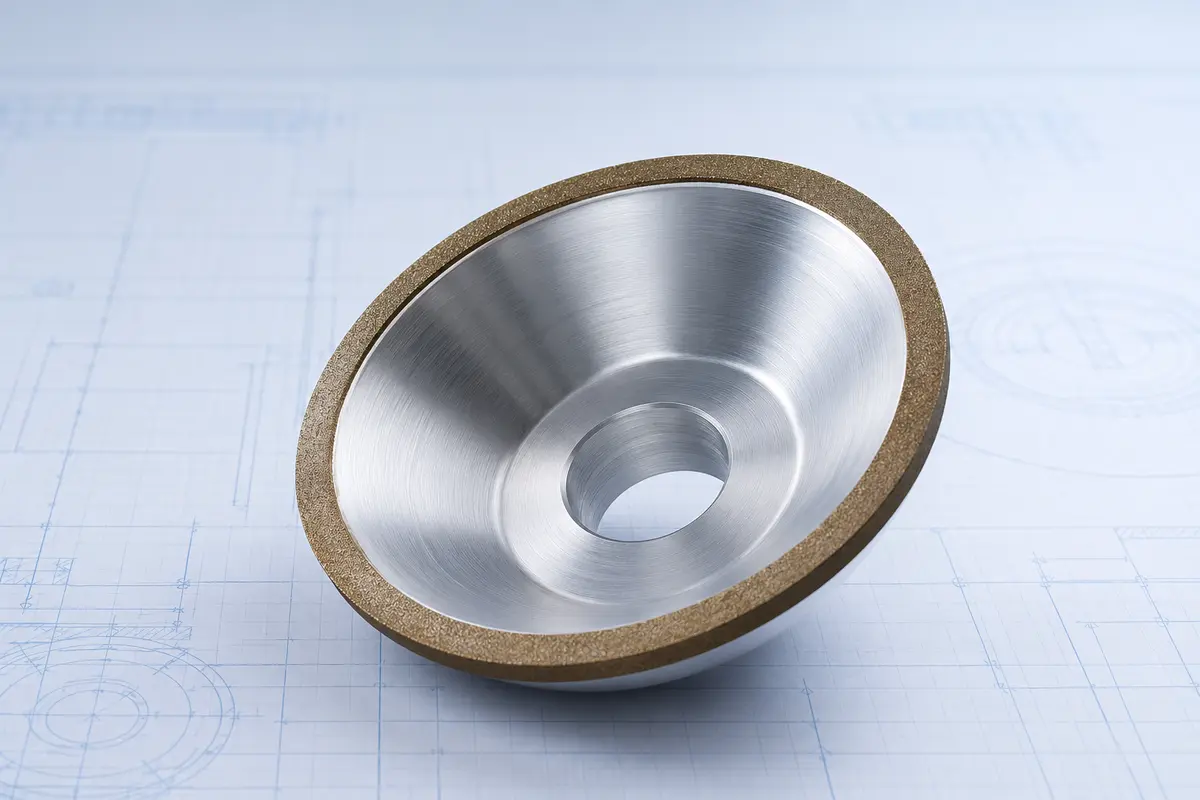
Workpiece material, machine, grinding method and target result are reviewed before the wheel route is finalized.
Custom wheel sourcing for non-ferrous hard materials
Custom Diamond Grinding Wheels
DIRECT ANSWER
Diamond grinding wheels are normally reviewed for carbide, PCD/PCBN, ceramics, glass and other non-ferrous hard materials. The correct wheel depends on the workpiece, machine, wheel geometry, bond, grit, coolant and the finish or tool-life target.
REVIEW INPUTMaterial · Machine · Wheel · Target
NORMAL MATERIAL FITCarbide · PCD/PCBN · Ceramics · Glass
KEY DECISIONEdge quality, finish, geometry and wheel life
FASTEST RFQ STARTDrawing, label, photo or current spec
PRODUCTION BASISConfirmed drawing and specification
Suitable materials
Where this product family normally fits.
- Tungsten carbide and carbide cutting tools
- PCD and PCBN cutting tools
- Technical ceramics and optical glass
- Composite and other hard non-ferrous materials
Common applications
Applications normally reviewed for this product family.
- Carbide drill and end-mill grinding
- Insert, punch, die and wear-part grinding
- PCD/PCBN edge and profile grinding
- Ceramic component and glass profile grinding
- Tool sharpening, regrinding and special profiles
01
Selection framework
Bond or sourcing route follows the application—not a generic catalogue rule.
These rows are an RFQ discussion guide. Final suitability depends on the complete grinding condition and manufacturing feasibility.
Bond / routeTypical review useWhat the buyer should send
Resin bond DiamondTool grinding, sharpening and controlled finishCurrent grit, finish target, coolant and wheel-life issue
Vitrified bond DiamondPrecision grinding, dressing control and form stabilityMachine, dressing method, speed and tolerance
Metal bond DiamondSelected carbide, ceramic, glass and profile applicationsMaterial, removal rate, profile and life target
Electroplated DiamondDefined profiles, form grinding and special shapesDrawing, profile tolerance and maximum speed
COMMON SHAPES / CONFIGURATIONS
1A11V16A211V912V914A14A2Custom profile
Quotation checklist
Minimum useful information for an accurate first review.
You do not need every field. Send what is available; missing details can be confirmed during follow-up.
Use this checklist in my RFQ- Workpiece
- Material grade, hardness or tool type
- Geometry
- Shape plus OD × thickness × bore × rim width
- Abrasive system
- Current bond, grit and concentration if known
- Machine
- Brand/model, speed, wet or dry and dressing method
- Target
- Finish, tolerance, edge quality, removal rate or life
- Commercial
- Quantity, delivery target and packing requirement
Pre-order controls
What is confirmed before quotation and production.
Critical dimensions, wheel shape, abrasive system, quantity and drawing revision are aligned in writing.
Required supplier documents, inspection points and records are agreed according to the quoted product and order.
Buyer questions
Clarify fit, specifications and RFQ inputs.
These visible answers summarize the main technical decisions without unsupported performance promises.
What materials normally use a Diamond grinding wheel?
Diamond is normally reviewed for carbide, PCD/PCBN, ceramics, glass and other hard non-ferrous materials. It is generally not the first choice for ferrous hardened steel applications.
Which wheel shape should I request?
Start from the current wheel drawing, label or machine setup. Common tool-grinding shapes include 1A1, 1V1, 6A2, 11V9 and 12V9, but the correct profile depends on the contact geometry and clearance required.
Can the current wheel be improved instead of copied?
Yes. If the current wheel has short life, chipping, slow cutting or poor finish, the review should consider bond, grit, concentration and grinding condition rather than copying the label alone.
Ready for a technical review?
Send the requirement you have.
Complete the details together.
A drawing is helpful, but a wheel label, photo, machine model or grinding problem can also start the review.
Start this RFQ