
Tool geometry
A tool drawing, magnified edge photo or current wheel profile helps define the contact condition.
Application guide for PCD and PCBN cutting tools
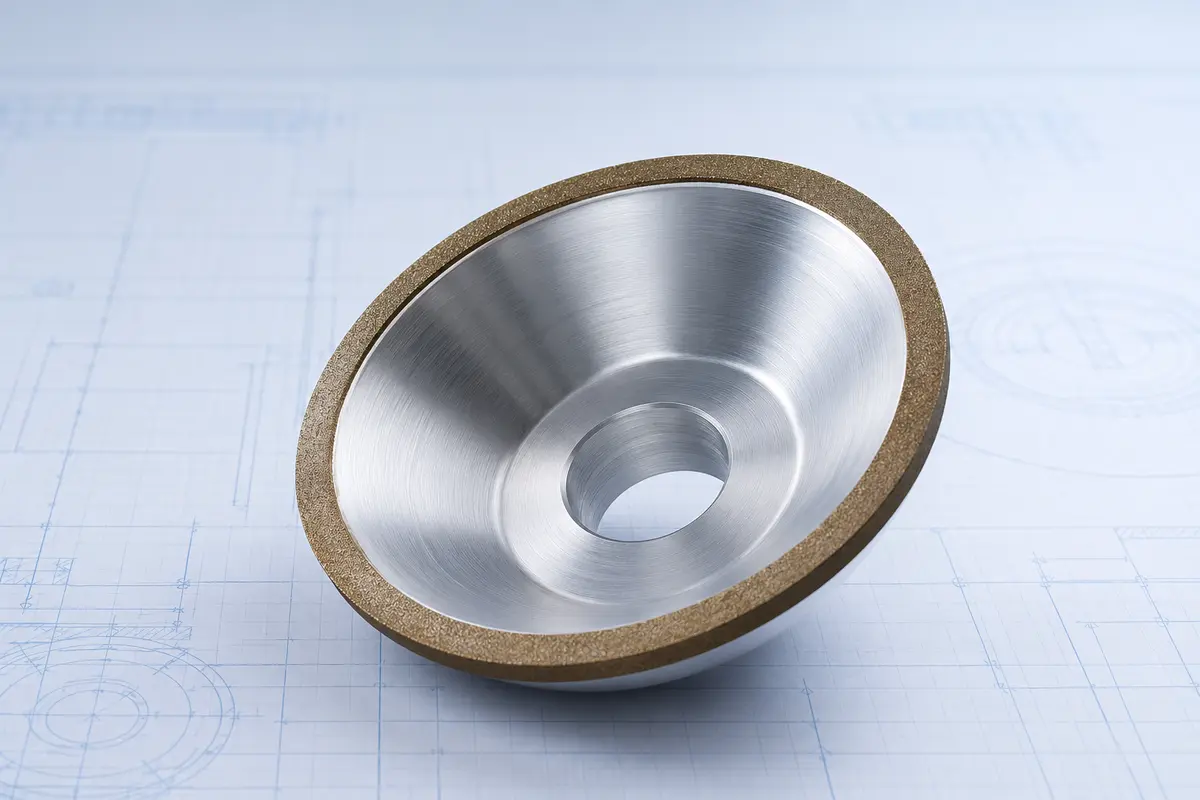
Diamond grinding wheels are normally reviewed for PCD and PCBN tool-edge and profile grinding. Wheel selection should start from the insert or tool geometry, machine, contact area, edge-quality target, bond system, grit and current performance issue.
Workpiece fit
Grinding scope
Selection inputs
These checkpoints support a useful RFQ; they are not a generic performance guarantee.
A tool drawing, magnified edge photo or current wheel profile helps define the contact condition.
State the required edge quality, finish, chipping limit or existing defect without assuming one universal wheel.
Machine model, speed, coolant and dressing method help close specification gaps.
Application RFQ checklist
A complete specification is not required for the first review. The items below help reduce follow-up and quotation ambiguity.
Use this checklist in my RFQApplication questions
Visible answers summarize the normal starting route and the information needed for a useful review.
Diamond wheels are normally reviewed for both PCD and PCBN tool grinding, but the complete application and desired edge condition determine the final specification.
A drawing is very useful for profile and clearance review, but a current wheel label, tool photo, machine model and problem description can start the RFQ.
Yes. If the current result is poor, the review can consider bond, grit, concentration, geometry and process condition rather than copying the label alone.
Need an application review?
Start with the material, machine, drawing, label or result that needs to improve.
Start this RFQQuick technical RFQ
A complete specification is not required. Iris can confirm missing dimensions and process details during follow-up.