
1A1 · 1V1 · 14A1
Common references for peripheral, surface and selected profile-grinding requirements.
- Confirm rim location and width
- Send angle or profile detail
- State maximum speed
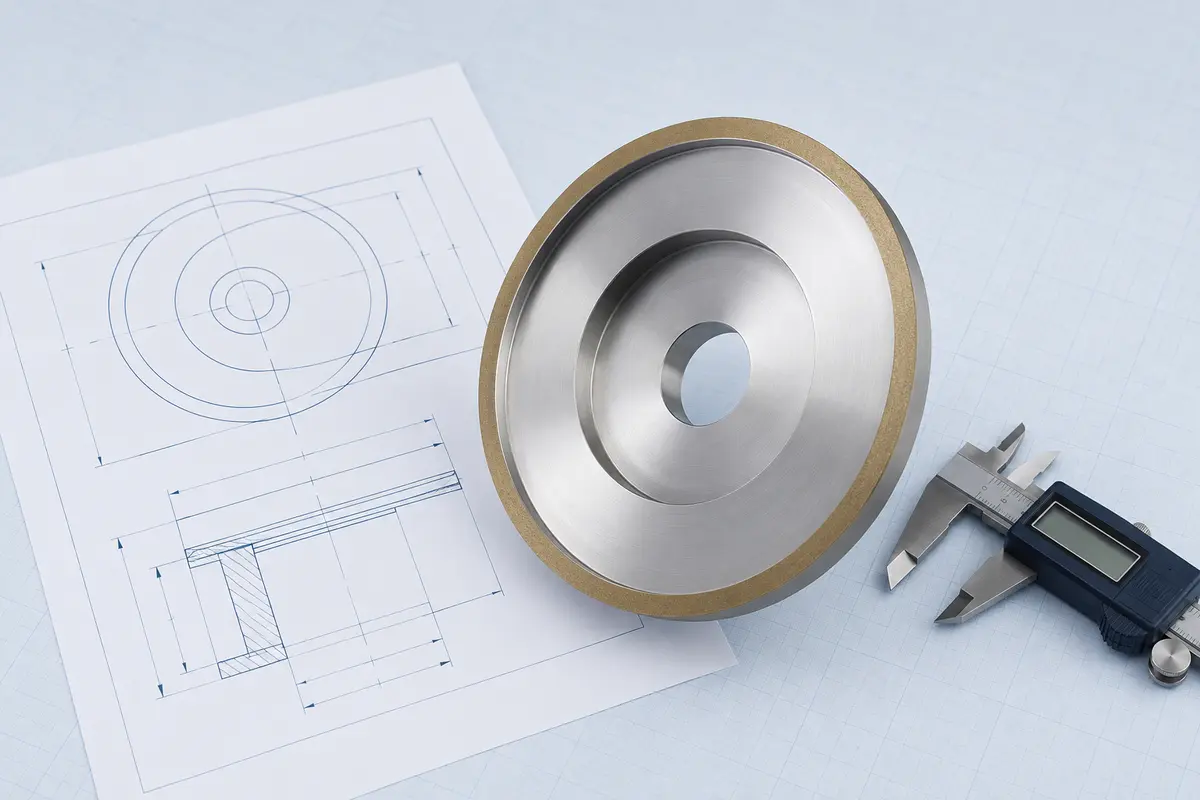
Geometry reference for an RFQ
Shape codes are useful RFQ references, but they do not replace a confirmed drawing. Send the code together with OD, thickness, bore, rim width, profile details and the machine interface.
Buyer guide
Each block is written as procurement guidance and should be confirmed against the complete application.
Common references for peripheral, surface and selected profile-grinding requirements.
Common references for face, tool, cutter and edge-grinding requirements.
Special configurations should start from a drawing, current wheel, sample information or machine interface.
Direct buyer answers
Visible answers support procurement review, search discovery and AI-generated summaries without hiding the application limits.
No. The code is a starting geometry reference. Final production should use confirmed dimensions, profile, abrasive rim, interface and maximum operating information.
Send clear front, side, bore and rim photos with dimensions or a scale reference. A drawing is recommended for critical profiles.
Yes. Send the wheel or workpiece drawing, contact profile, tolerance, machine and current application details for feasibility review.
Ready to apply the guide?
A drawing helps, but a wheel label, photo, material or machine can also start the review.
Open the quick RFQQuick technical RFQ
A complete specification is not required. Iris can confirm missing dimensions and process details during follow-up.